


Alfresco Design Ideas for Queensland Pool Areas


Alfresco design ideas for Queensland pool areas are worth thinking through carefully — because the alfresco is often the part of the outdoor space that determines whether the pool area actually gets used.
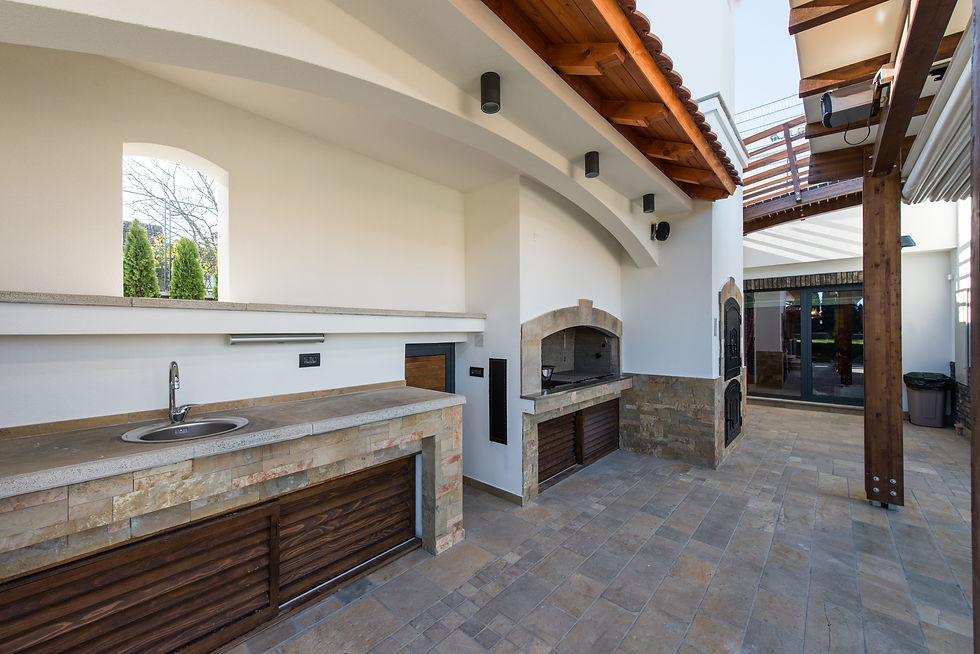
A pool without a covered outdoor area in Queensland is a pool for summer afternoons only. The hours between 10am and 3pm in a Queensland summer are not pool hours — they're shade hours. The pool gets used in the early morning, the late afternoon and the evening. The covered alfresco is where the outdoor space is actually inhabited through the middle of the day.
Get the alfresco right and the outdoor space becomes genuinely liveable year-round. Get it wrong — or skip it — and the pool area is underused relative to its potential, regardless of how well the pool itself is designed.
What a Pool Alfresco Actually Needs to Do
Before getting to design directions and material choices, it's worth being clear about what a well-designed pool alfresco actually needs to accomplish.
Shade from the Queensland sun. The primary function. The alfresco must provide genuine shade through the hottest hours — not filtered light through a pergola with gaps, but real shade that makes the outdoor space comfortable when the sun is at its peak.
Shelter from Queensland rain. Afternoon summer storms are a reality in Queensland. An alfresco that allows rain to blow in from the sides is an alfresco that clears when it rains. Adequate weather protection — a solid or near-solid roof with appropriate side protection on the prevailing weather side — allows the outdoor space to be used in all but the most extreme conditions.
Visual connection to the pool. The alfresco should be positioned and designed so the pool is visible from within it. The cook at the outdoor kitchen can see the pool. The adults at the dining table can see the children in the water. The spatial relationship between the covered area and the pool is a safety and enjoyment consideration simultaneously.
Comfortable scale. An alfresco that is too small for the outdoor furniture it needs to contain is not a comfortable space. Queensland outdoor entertaining typically involves a dining table for six to eight people, a lounge setting and space to move between them. The alfresco needs to be large enough to accommodate this without feeling cramped.
Alfresco Design Ideas in Queensland: Structural Options
Roof Extension from the House
A roof extension — where the alfresco roof is integrated with the main roof of the house — is the most weatherproof and architecturally resolved alfresco option. The outdoor space reads as part of the house rather than an addition to it.
A roof extension requires structural engineering and council approval, and the cost reflects its permanence. But the result is a covered outdoor space that can be used in virtually any weather condition — and that adds measurable value to the property.
For new pool builds where the alfresco is being designed alongside the pool, a roof extension is worth including in the scope from the beginning. Retrofitting one to an existing house is possible but more disruptive and expensive.
Freestanding Pergola — Solid Roof
A freestanding pergola with a solid Colorbond, polycarbonate or timber roof is the most common alfresco structure in Queensland. It is separate from the house structure — connected by a flashing or gutter rather than structurally integrated — and can be designed and built as part of the pool project without requiring changes to the house.
Solid roof pergolas provide genuine weather protection and can be insulated for additional thermal comfort. They are available in a range of materials and finishes and can be designed to complement or match the house and pool materials.
The span of a solid roof pergola is limited by the structural requirements of the roof material. For larger alfresco areas, multiple spans or engineered beams may be required.
Open Pergola — Louvred or Slatted
An open pergola — with a louvred, slatted or latticed roof rather than a solid one — provides shade but not full weather protection. In Queensland's climate, a louvred pergola with adjustable blades offers flexibility — open for breeze on mild days, closed for weather protection when needed.
Automated louvre systems are available and increasingly popular in Queensland pool alfresco design. The louvres open and close at the touch of a button — or automatically in response to rain sensors. The visual result is clean and architectural. The practical benefit is significant.
An open pergola is typically less expensive than a solid roof structure of equivalent size. For homeowners who prioritise visual lightness and natural ventilation over full weather protection, it is a legitimate choice.
Shade Sails
Shade sails are the lowest-cost alfresco shade option. They provide UV and sun protection but no rain protection. In Queensland, a shade sail over a pool area is a summer solution — it makes the space more comfortable in direct sun but doesn't allow year-round entertaining.
For homeowners who want a low-cost interim solution, or for a pool area where a permanent structure isn't appropriate, shade sails are a practical option. For a pool area that is intended to be the primary outdoor entertaining space of the home, a permanent covered structure is a better long-term investment.
Alfresco Flooring for Queensland Pool Areas
The floor of the alfresco area connects visually and physically to the surrounding pool paving. The material choice matters for both practical and aesthetic reasons.
Porcelain tile is the most popular choice for Queensland pool alfresco floors. It is slip-resistant when wet, UV-stable, easy to clean and available in a huge range of colours and formats. Large-format porcelain tiles — 600 x 600mm or 600 x 1200mm — make a covered outdoor space feel generous and considered.
Natural stone — travertine, limestone, granite — brings warmth and texture that porcelain can replicate but not fully match. The material is more expensive and requires sealing and occasional maintenance. In a high-quality pool and alfresco project, natural stone is often the right material choice regardless of cost.
Concrete — either polished, honed or aggregate-exposed — is increasingly popular in contemporary Queensland alfresco design. The material is continuous — no grout lines, no tile joints — and produces a calm, resolved floor surface. Concrete requires appropriate sealing for outdoor use and can show cracking over time if not properly reinforced and jointed.
Timber decking — real hardwood or composite decking — brings warmth and a different material language to the alfresco floor. Timber adjacent to a pool creates a textural contrast between the hard paving of the pool surrounds and the warmth of the deck. Real hardwood in a pool environment requires appropriate species selection and maintenance. Composite decking is lower maintenance but varies in quality.
Alfresco Lighting for Queensland Pool Areas
Lighting turns an alfresco from a daytime shade structure into an evening entertaining space. The Queensland outdoor entertaining culture extends well into the evening — the temperature drops to something comfortable, the pool glows, the conversation continues.
Ceiling-mounted downlights in the alfresco roof provide functional illumination for the dining and cooking areas. LED downlights are the standard choice — energy-efficient, long-lasting and dimmable.
Pendant lighting over a dining table creates a warm, intimate dining experience that downlights alone don't produce. A pendant or cluster of pendants positioned above the outdoor dining table brings the light down to the human scale of the table.
Strip lighting along the underside of beams, beneath benchtops or along pergola rafters creates ambient illumination that warms the space without producing the harsh contrast of direct downlighting.
Outdoor fans with integrated lighting — ceiling-mounted in the alfresco roof — provide both air movement and illumination and are a practical choice for Queensland's humid summer evenings.
What Influences the Cost of a Pool Alfresco in Queensland?
Alfresco costs vary widely depending on a combination of structural, material and site-specific decisions. Understanding what drives the variation helps homeowners build a realistic picture of the investment before getting quotes.
The structure type. This is the single biggest cost driver. A shade sail is the simplest and least expensive option. A freestanding pergola with a solid roof sits in the mid-range. An automated louvred roof system is significantly more expensive than a manual one. A full roof extension integrated with the house is the most expensive option — and the most weatherproof. Each step up in structure type brings a meaningful step up in cost.
Size and span. A larger alfresco costs more than a smaller one — more materials, more labour, more structural engineering where larger spans require it. The relationship between the alfresco size and the pool area it serves needs to be resolved in the design stage so the structure is appropriately sized from the start.
Materials and finishes. A Colorbond roof is less expensive than an insulated panel roof, which is less expensive than a timber-and-tile roof that matches the house. The post and beam materials — steel versus hardwood versus engineered timber — affect both the cost and the visual outcome.
Connection to the house. A freestanding structure is simpler and less expensive to build than one that connects structurally to the house. A roof extension requires engineering assessment of the existing building structure, waterproofing at the junction and, in most cases, a building approval — all of which add to the project cost and timeline.
Electrical and mechanical fitout. Ceiling fans, downlights, pendant lighting, outdoor speakers and automated louvre controls all add to the alfresco cost beyond the structure itself. These elements are worth budgeting for at the planning stage rather than being treated as afterthoughts.
Flooring. Whether the alfresco floor is continuous with the pool paving or uses a different material — and the material specified — affects the cost of the overall outdoor space. Premium natural stone costs more than standard porcelain tile. A continuous poured concrete floor costs differently again.
The most accurate way to understand what an alfresco will cost for your specific brief, site and design direction is a properly scoped quote from a builder who has assessed the site and the design requirements in full. If you want to get an idea of pricing for concrete pools if you know your sizing, check our pricing packages.
Keep Exploring
Want to design a pool alfresco that actually works year-round?
Luxia Pools designs and builds complete outdoor environments — pool, alfresco, kitchen and landscaping — for homeowners across the Sunshine Coast, Brisbane and the Gold Coast. If you want to understand what a properly designed covered entertaining area would look like alongside your pool, and what it would cost as part of the broader project, the conversation starts here.
Ready to Dive In?
Start your pool journey with Luxia Pools – the leaders in custom-designed, high-quality concrete pools in Queensland.
— Luxia Pools | Sunshine Coast · Brisbane · Gold C


Comments