


Pool Lighting Design Guide for Queensland Homes


Pool lighting design in Australia is the element of a pool project that most homeowners think least about during construction — and appreciate most after the pool is complete.
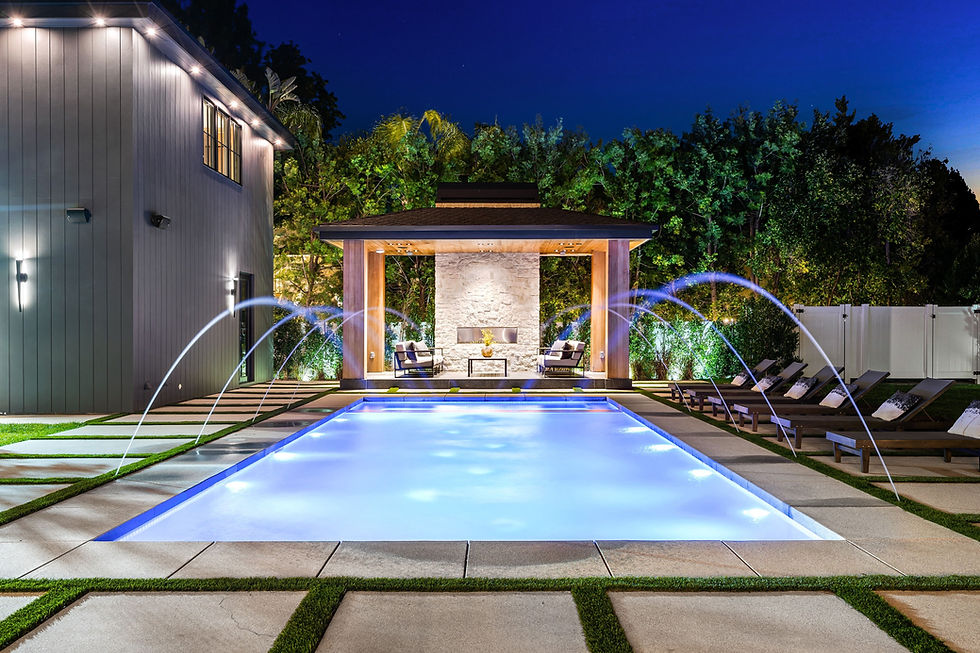
A pool in daylight is impressive. A pool at night with well-considered lighting is a completely different experience. The water glows from within. The surrounding paving is warm and inviting. The garden has depth and shadow. The outdoor space becomes a place you want to be after dark — not just somewhere the pool happens to be.
Getting pool lighting right requires thinking about it as a design discipline, not a product selection. The question is not which lights to buy — it's how to layer light across the pool and the surrounding space so the result after dark is as compelling as the design in daylight.
Pool Lighting Design in Australia: The Layering Principle
The most important concept in pool lighting design is layering. A single light source — however good — produces flat, undifferentiated illumination. Layered light sources — at different heights, from different directions, at different intensities — produce depth, dimension and atmosphere.
A well-designed pool lighting scheme typically involves three layers:
The water layer. Light within the pool itself — LED underwater fixtures that illuminate the pool from below the waterline. This is the light that makes a pool glow at night.
The perimeter layer. Light at the pool's edge — uplighting into feature walls, downlighting onto coping, strip lighting under raised bond beams, step lights in the pool surrounds. This is the light that defines the edges of the pool space.
The ambient layer. Light in the broader outdoor space — the alfresco ceiling lights, the garden uplighting, the path lighting, the wall washing. This is the light that gives the outdoor space depth and makes it feel like a complete environment rather than a pool with darkness around it.
Each layer operates independently and can be controlled separately. The result is a system that can produce very different moods — from a bright, functional setting for evening entertaining to a soft, atmospheric setting for a quiet swim.
Underwater Pool Lighting
Underwater LED fixtures are the starting point for any pool lighting design. They provide the signature glow that makes a pool visible and inviting at night.
Fixture Types
Niche-mounted LED fixtures. The most common underwater pool light — a sealed LED unit mounted in a recessed housing (niche) built into the pool wall during construction. Quality LED pool lights produce bright, even illumination and are available in single-colour white and colour-changing RGB configurations.
The number and positioning of underwater fixtures determines how evenly the pool is lit and whether shadows or dark spots appear. A pool lighting design should specify the minimum number of fixtures required to achieve even illumination across the pool floor and walls — not the cheapest number that technically lights the pool.
Fibre optic systems. Fibre optic pool lighting uses a remote light source — located outside the pool, in the equipment area — to transmit light through optical fibres to individual points within the pool. The fibres themselves carry no electricity and produce no heat at the point of illumination, making them genuinely safe for underwater use.
Fibre optic systems can create starfield effects — hundreds of tiny points of light in the pool floor or walls — that LED systems cannot replicate. The visual effect is unique and genuinely spectacular. The cost is higher than LED and the light output is lower — fibre optic lighting is a design feature rather than a primary pool illumination source.
Colour Temperature and Colour-Changing
White LED pool lights are available in a range of colour temperatures — from warm white (around 2700K) to cool white (around 5000K). Warmer temperatures produce a more amber, intimate light. Cooler temperatures produce a crisper, more contemporary effect.
Colour-changing RGB LED fixtures can produce the full spectrum of colours. When used with restraint — warm white as the primary setting, colour occasionally for special occasions — they offer flexibility.
When used primarily for colour effects, they can produce results that feel more nightclub than residential.
The colour-changing capability is worth having; the discipline to use it with restraint is equally worth having.
Perimeter Lighting
Perimeter lighting defines the edges of the pool space and creates the visual transition between the pool and the surrounding outdoor environment.
Coping and Step Lighting
LED strip lights or recessed step lights embedded in the pool coping, the pool surrounds or the steps between levels create a low, warm light at the pool's edge. This lighting serves both aesthetic and safety functions — it makes the pool edge visible at night and creates a warm ground-level light source that contrasts with the underwater pool glow above.
Step lights — recessed LED fixtures set into the vertical face of steps, retaining walls or raised platforms — are among the most effective tools for giving a pool area depth and dimension after dark. They produce a wash of light at low level that reveals the texture and material of the step face and creates shadow and contrast.
Uplight and Wall Washing
LED uplights — directional fixtures set into the paving or garden bed — directed at feature walls, specimen plants or architectural elements adjacent to the pool create vertical planes of light that give the outdoor space height and visual interest.
A rendered feature wall behind a pool, lit from below by an LED uplight, becomes a glowing vertical surface that frames the pool and adds scale to the outdoor environment. The same wall in darkness is just a wall.
Under-Coping Strip Lighting
LED strip lighting installed under the pool coping — running along the full perimeter of the pool — creates a horizontal band of light at water level that makes the pool appear to float and gives the water a luminous, edge-lit quality. The effect is particularly strong in contemporary pool designs with a clean coping line.
Garden and Ambient Lighting
The lighting beyond the pool's immediate perimeter determines how the outdoor space reads as a whole after dark.
Specimen plant uplighting.
A single LED uplight at the base of a large palm, a feature tree or a specimen shrub creates a lit focal point in the garden that gives the outdoor space depth and scale after dark. Without this, the garden beyond the pool lighting zone disappears into darkness.
Path and surface lighting.
Low-level LED lights along garden paths, at the base of retaining walls or embedded in paving direct circulation after dark and create a visual rhythm through the outdoor space.
Alfresco ceiling lighting.
Downlights in the alfresco roof provide functional illumination for the entertaining area. The light level should be dimmable — bright for active entertaining, low for a quieter atmosphere. Pendant lights over the dining table create intimacy at the human scale that ceiling downlights alone don't produce.
Perimeter garden lighting.
Bollard lights or in-ground uplights along the garden perimeter define the edges of the outdoor space after dark and prevent the pool area from feeling like a lit space surrounded by void.
Smart Control Systems
Pool lighting that can be controlled from a smartphone or a wall-mounted controller — adjusting colour, intensity and which zones are active — is not a luxury. It is a practical improvement that changes how often and how effectively the lighting is used.
A lighting system that requires individual switches to be adjusted at each fixture or each circuit will almost always end up being left on one setting — whatever the default is. A system controlled from a single device — or integrated into a broader smart home or pool automation system — is actually used and adjusted to suit different occasions and moods.
Smart lighting control is worth including from the design stage rather than retrofitting. The wiring and control infrastructure is much simpler to install during construction than after the outdoor space is complete.
What Does Pool Lighting Cost?
Lighting Element | Approximate Cost |
LED underwater fixture (per fixture, installed) | $400 – $800 |
Fibre optic system (complete pool installation) | $5,000 – $15,000 |
LED strip lighting under coping (per linear metre) | $80 – $150 |
Recessed step lights (per fixture, installed) | $200 – $400 |
Garden uplights (per fixture, installed) | $150 – $350 |
Smart lighting control system | $2,000 – $8,000 |
Complete pool and garden lighting scheme | $8,000 – $30,000+ |
These ranges listed are approximations based on Australian pool builders pricing. To find our exact pricing for your pool book a free chat and our team will be in contact shortly.
Keep Exploring
Want lighting designed into your pool from the start?
Pool lighting that is planned from the beginning — with the niche positions, the conduit runs and the control system all resolved before the shell is poured — produces a far better result than lighting added after construction.
Luxia Pools designs and specifies pool and outdoor lighting for every complete project we build across the Sunshine Coast, Brisbane and the Gold Coast. If you want a pool area that looks as good at night as it does in the day, the conversation starts here.
Book a chat and one of our team will be in touch. No pressure — just a clearer picture of what's possible.
Ready to Dive In?
Start your pool journey with Luxia Pools – the leaders in custom-designed, high-quality concrete pools in Queensland.
— Luxia Pools | Sunshine Coast · Brisbane · Gold Coast —


Comments